
He is excited about art, about creating and manipulating shapes. He draws big looping circles with his yellow crayon, clenched so tightly his knuckles are white. "Moon, mommy." A minute later it is not a moon but a planet. He does not fear the attempt at art, nor does he hesitate to reinterpret, the change. He just draws.
I take him to art class each Thursday morning. A small collection of toddlers with their moms in tow dabble in finger paint to create masks and press hand prints onto construction paper. Our children beg us to be artists with them. During the first few classes, many of us moms hesitated, content to watch over small shoulders and attempt to control the chaos that is a painting toddler. "Hey little guy, why don't you..." or "Why not try this." But toddlers resist such control; they throw tantrums when not allowed to create freely.
When did we lose this. At what point do we harness the impulse to create, to get dirty. When do we become so inhibited that we stop looking at the world with child-like glee?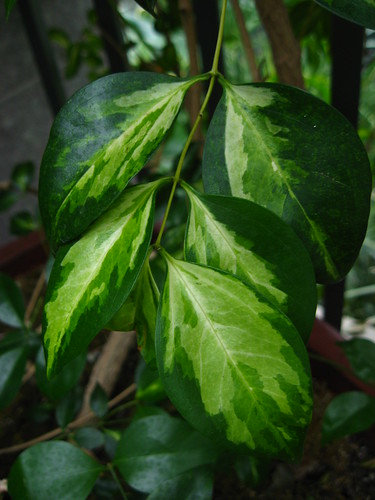
For this class I've been asked to draw what I see before me. But I've had a hard time using my pen for something other than scribbling words to make sense and make meaning. I am hesitant to try to make meaning without words, too comfortable to hide behind the camera's lens or behind words.
But this morning, I'm willing to give it a shot, break out of my comfort zone and embrace a child-like optimism about my artistic skills.
Fingers of gold reach down each leaf,
some stronger than others.
Some a proud emerald,
untouched or marbled.
The veins,
barely visible.
No bold color to mark them,
to point out where life flows.
Look closely to see
the mark to divide,
the secondary veins that course
the perimeter,
tiny fingers reaching
for the edge.
The rain pounding the glass ceiling of the conservatory is a crescendoing snare drum, the drum roll growing more intense with each passing minute. And the water coursing down the metal gutters just behind me echo the sound of a hammer on a xylophone, sending wild notes echoing throughout the room.
The sound is unexpected. In a place like Longwood Gardens, I expect to write what I see. I don't know that I spend much time thinking about what I hear, too often attempting to tune out all the background noise in order to concentrate on some mundane daily task. I hear too much in my head - "Don't forget to pick up milk? We're almost out. How did I let it get so low, anyway?" - that I forget to listen to the world around me.
A cell phone rings some obnoxiously unnameable tune. And after three or four bars, a tall, dark-haired gentleman in an equally dark sweater answers. "Hello?...Oh, hello!" He walks on through the carefully cared for landscape, through the glass doors at the end of this room, and onto the next room, carrying his conversation with him.
In the stillness of this desert room, the distracted voice stands out. I'm relieved when the glass door heaves a sigh as he passes into the next room. I am thankful again for the lack of voices, content to listen to the fat plops of the rain as it sneaks through a pane overhead and puddles on the slate floor next to me.
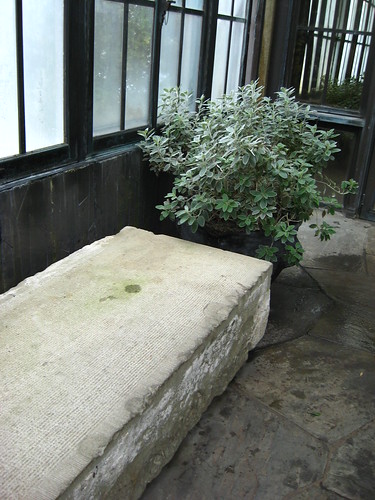
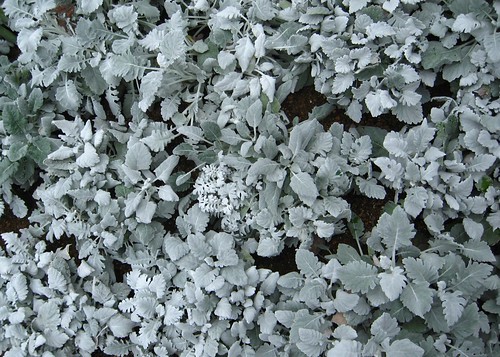
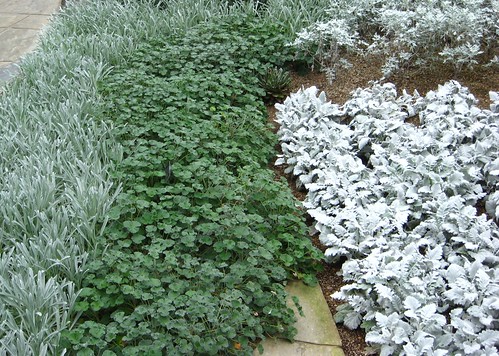
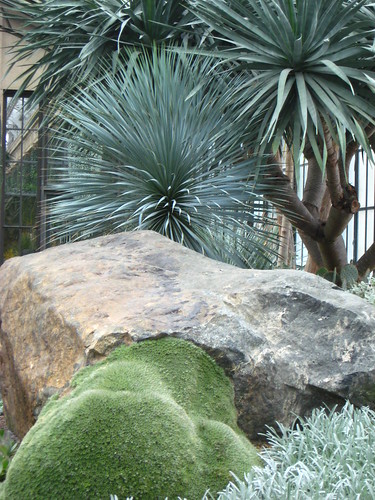
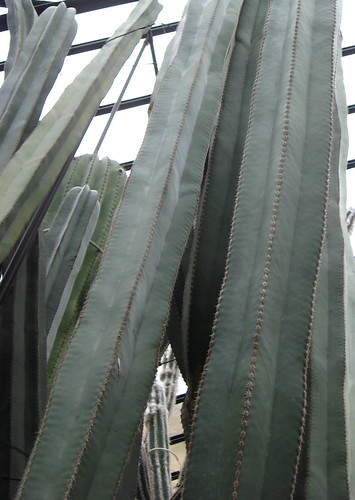
The other rooms are breath-taking. The orchids, so fragile, overwhelm all the senses. But they are also showy, leaving no room to imagine what if. They put it all out there on display. In contrast, this desert landscape is a blank canvas for the imagination. Like the little girl in pink boots, my son wants to climb this room. It 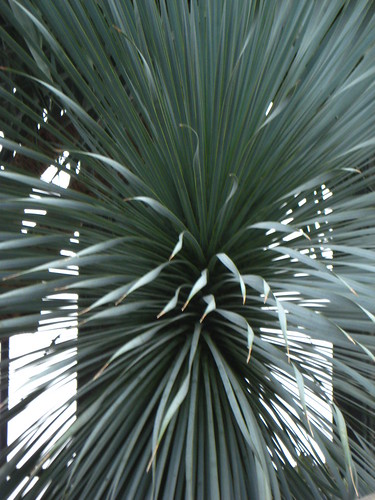
I can learn a lot from my little man.
 I'm hiding. I've tucked myself in behind a macassar oil tree and a hare's foot fern. I don't want to sit out in the open to write. I want to peak out on the world, content to observe and write unseen.
 It is odd watching mommies pushing empty strollers while toddlers clomp behind, refusing to be harnessed. I am usually in this position, children in tow, attempting to wrangle one out of a fountain while pacifying another. Today, I sit attempting a wrangling of a different sort.
I'm tempted to get up and move, to go to my familiar haunts, to watch the mommies and their children. It is familiar. I can predict what I would see, what I would write. Familiar reflections on my role as a mom, how odd it is to have this time to myself. But I don't want to do that. I'm trying to push myself this morning, to be the unseen seer. I'm attempting to wrangle my own tendencies, keep them in check, so that I might see the unseen.
But this is too much like yoga. I to want to want to do yoga. To calm my breathing, my thoughts. But the minute I still my body and breathing to observe the world I'm in, my mind goes racing to the checklist of chores and duties lined up in my head. So much so that I miss what is right in front of me.
The leaves of the hair oil tree are touching my knee. Their edged a crusty brown, and the leaf closest to me has a hold eaten straight through its middle. In such a controlled environment, a summer englassed in the midst of winter, where did the bug come from?

 Twitter/jenniferward
 YouTube/teacherward
 Del.icio.us/msward
 Skype/teacherward
 GMail/ms.jen.ward
 Blog/Teacher Et Cetera
 Google Reader